The brilliance of the faction system is its conformity to the faction that removes the threat of anyone exercising their independent will. Divergents threaten that system.
Don't get me wrong. There is a certain beauty to your resistance, its defiance of any categorization.
It's a beauty we can't afford.
Power/Knowledge/Normality
Power and Knowledge are a relation. They form a grid that intersects with history. As capitalism grows the demand for workers/consumers grows and "normality" is demanded. The vagrants, the mad, criminals, derelicts, et al are rounded up and confined all over Europe.
Divergent's Faction System illustrates the Foucauldian Grid. Each faction demands explicit and implicit conformity. Beatrice smothers herself to display the correct behavior demanded of her in the faction of Abnegation. Caleb is able to pass by displaying all the outward behavior of Abnegation as "floating signs" masking the emptiness of his commitment. He passes.
Foucault has taught us that power does not come from above. It seeps from below, through the interstices. Caleb controls Beatrice, inhibiting any spontaneous gesture she begins to make. This is where power is. Right there with Caleb overseeing her every move when he is with her. Pecking at her like a crow, keeping her from growing as a person.
What is important is that Beatrice be obedient. That she display the "floating signs" at least of selflessness.And this is the meaning of the Grid of power/knowledge/normality.
The other aspect here is 24/7 surveillance.
This movie which has so much respect for its fan base signals surveillance without explaining it.
1. Beatrice has been told by Tori to go home, say the test made her sick so she can think over what to do without being in a room with others to distract her. Caleb asks her over dinner prep where she was and she tells him she was sick and came home. He asks her if she finished her test and she says yes. Then he asks her her result. Instead of her usual avoidance or lying, she inverts his question to address his intent by saying, "What were your results?" His questions are interrogative, for the purpose of domination and she turns the tables on him.
2. At the dinner table her father admonishes her for just coming home like that and she says, "I was sick." And still he reprimands her as they are being watched carefully, being scrutinized.
3. When her mother appears as they are loading the truck, right after embracing her Tris says, "Mom, you can't be here." Natalie says, "I know but you're in danger."
So with these few sentences we know people are not only in factions, but they are confined as to where they can and cannot go.So, as in Hunger Games, we get confinement, although not as harsh, but still confinement it is.
Discipline and Punish And here's Taylor Swift
But that's exactly what Foucault meant Swiftie Smart woman
Beatrice gets her hair trimmed the second day of every third month. At that time she may look in the mirror for a minute or so. That's FOUR times a year she gets to see her image in a mirror, from the chest up.
Beatrice at Mirror at Abnegation
Beatrice entering aptitude test room sneaking a look at herself
Tori: What's with Abnegation and mirrors.
Beatrice: We reject vanity.
Tori: Yes, I know. Sit down.
Here's a clip of that scene with commentary by director Neil Burger
So now you have seen that she lies in the chair and looks to her left that is a mirror, seeing herself. She gets up, walks over and sees herself standing for the first time - that is
her entire physical body for the first time, not just from her chest up for a few seconds.
She gestures by raising her right hand as her image mirrors her in the mirror.
Reading through Lacan's Mirror Stage:
This EVENT takes place at six months usually. The mother plays with her baby in front of the mirror as the baby experiences an image that also waves its arms, jiggles its legs, moves in the excitement of its image, before words, before walking, before experiencing any SELF.
Jacques Lacan
Beatrice - and Tobias and Caleb - have never experienced the Mirror Stage in the development of the SELF - the ego.
Beatrice has experienced herself as not selfless enough for Abnegation. She doesn't fit in. She doesn't belong.
How is it possible to feel or be selfless if you don't have a self.
Caleb fakes it by assuming a false self.
Tobias constructs a self at Dauntless.
A ZEN story:
A student goes to the zen master wanting to lose his ego.
"This jubilant assumption of his specular image by the child at theinfansstage, still sunk in his motor incapacity and nursling dependence would seem to exhibit in an exemplary situation the symbolic matrix in which the I is precipitated in a primordial form,beforeit is objectified in the dialectic of identification with the other, andbeforelanguage restores to it, in the universal, its function as subject." (Lacan ECRITS)
Lacan likens theEVENTto Kohler'sAha!of the ape grasping the stick to get the banana, the beginning moment of intelligence.
Beatrice has just experienced herself completely in the mirror then looks to her left, where she is multiplied into infinity.
This is an EVENT!
For Beatrice it has never occurred until the Aptitude Test when she experiences the
EVENT of the Mirror Stage,
which sheds its light on the formation of theI the Imagothat ancient term - as experienced in psychoanalysis. (p.118 Ecrits)
We have only to understand the MIRROR STAGEas an identification, in the full sense that analysis gives to the term:
namely the transformation that takes place in the subject when s/he assumes an image
Turning to the left she sees herself multiplied into infinity and turning around again multiplied.
And there are multitudes of images of Beatrice. To echo the Walt Whitman quote, "I am multitudes." That there is no one person you are. There are changes and they can be made.
Turning around behind her to respond to the command "Choose"
Choose (Now we have had 3 Beatrices)
Beatrice says, "Tell me." She doesn't understand. Choose what as she looks at the luscious raw steak and shiny knife on the pedestal surface. "Choose before it's too late." And then it is too late as the growling ferocious dog comes at her and she looks at the now empty pedestal tables. She has missed her chance by refusing to choose.
But how can one choose between options if there is no SELF to do the choosing? Now she must respond to the simulation - aptitude test - with her instincts, responding to what occurs. Trusting herself to choose now since she is alone with the situation in the simulation. Only now does she experience a self that responds instinctively, rather than complying obediently to demands. As the multiple ferocious dogs get ready to attack multitple Beatrices, Beatrice assumes the position of satyagraha - passivity in the face of violence. At this moment all the multiples disappear and there is just one Beatrice who now responds in multiple ways to the problems in the Simulation. At this moment Beatrice experiences a SELF who chooses, and who chooses instinctively. In a few moments Beatrice has embraced the entire Mirror Stage.
In other words we have TWO egos (at least), if you will. Or rather an unexplainable, pre-linguistic core of a bodily and mental and emotional self that has no words to define it. Just a GESTALT. Identity is irrelevant here. And on this "self" is built the social self, our many identifications, our tweaking of it to present ourselves to our world, our presented and performative self to others. Exiting from the simulation Tori tells her she must trust herself. The test didn't work on her, she is divergent. She leaves the building and on the way home sees some "factionless" outside rummaging through the dumpsters. A woman is there that she looks at. For the first time Beatrice sees the Other as a person, not a nameless outcast. And the factionless woman turns, knowing that she is not only being looked at, but that Beatrice SEES her, and she feels shame, quietly walking away from her gaze. At home she will reflect Caleb's questioning of her result in the test by inverting his question, "What were your results?" And Caleb smiles. Beatrice has felt her SELF and its will to know/power She will continue questioning at the dinner table. The infant repeats the Mirror Stage up until 18 months and then tires of it. The chimp tires of it almost immediately as the mirror is empty. Beatrice repeats it during dinner at home as she turns her spoon over and regards her face in the curved reflection of her spoon. Lacan discusses the non-verbal, pre-verbal imagoas the unalterable core of the self before all social identifications are piled on top of it, obscuring it to our knowing, enabling us to forget it. And this is where Lacan brings in the concept, that again ancient concept, of THE DOUBLE. THE SHADOW. The reflection in the mirror Reading through Baudrillard-LINK Beatrice will encounter her DOUBLE as Tris, when in a life threatening situation, during her fearscape. She is not alienated, as we are, from her DOUBLE, but converses with it as primitive cultures do. This isn't real. Returning to Lacan, the SELF inThe Mirror Stage begins to repeat and to imitate others, building up with social identifications a social or second self. Beatrice after entering Dauntless begins by observing how others are running down the stairs, climbing to the platform, getting on the train, jumping off onto the roof. Copying the others. And then comes the moment, the EVENT for Beatrice. Eric: Who's it gonna be? Beatrice: Me. And Beatrice climbs clumsily up on the ledge, gathers her courage, and she jumps first. Upon landing in the net, Four lifting her out and suggesting a new name, she becomes TRIS She has condensed the Mirror Stage into 2 days. She now begins the journey of building a social self in Dauntless where she will meet her Double a number of times. First in warning in fearscapes, then in joy as she "flies" down the zipline and sees herself reflected in the windows of the buildings,
lastly when expecting to be shot, in acquiescence, at her moment of impending death. The Double appears at the moment of Death. Her Double is silent as she looks at her reflection in a puddle of water as Narcissus did.
We have only to understand the MIRROR STAGEas an identification, in the full sense that psychoanalysis gives to the term:
namely the transformation that takes place in the subject when s/he assumes an image
This dinner and its setting is very like a present day Amish meal in the home. People eat quietly, saying just what they must. It is stifling for anyone who starves for intelligent conversation while eating with family and/or friends. Tris's anxiety about choosing is controlled. Caleb's secret is contained. And nothing really much is said. Just the allusion to Marcus's beating his son to cause his defection. Not true of course. This is reality that conceals the REAL. The false contentment that replaces joy and spontaneity. Beatrice thinks there is something missing in her because she can't be selfless enough. One can see how feelings fester in this environment. Perhaps some Ritalin! This is what peace looks like. And it is monotonous and boring eh. This is also the Happy Ending readers and movie goers want for Tris and Four. The happy family. No faction problems. Just quiet contentment. Children, a dog perhaps, etc. The Happy Ending. And all this is conveyed in a short dinner scene. This is a director and a screen writer who are seriously intelligent.
Awkward Embraces
The Lack of touch is so acute in this scene. The awkward embracing of people who are not used to showing affection to each other. And certainly not passion or desire. The movie moves on to focus on every time Four touches Tris. She feels each one intensely. He is touching indifferently. Factually you might say until this scene.
Four Advising Tris on Fighting Peter
This time he grabs her arm roughly to make sure she remembers what he told her about fighting. That she must attack first and not go on the defensive. Of course her short lived initial success with Peter surprises him and infuriates him so that he hurts her even more. And Eric signals for him to put her away with a kick at the end of it.
Lamb to the Slaughter Compliments of Eric
They all know he has arranged for this match to eliminate Tris for talking back to him at the knife throwing. This is the way it goes for truth-tellers, for parrhesiastes.


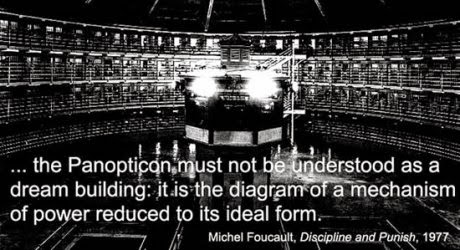

 But that's exactly what Foucault meant Swiftie


